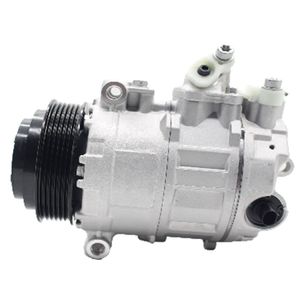

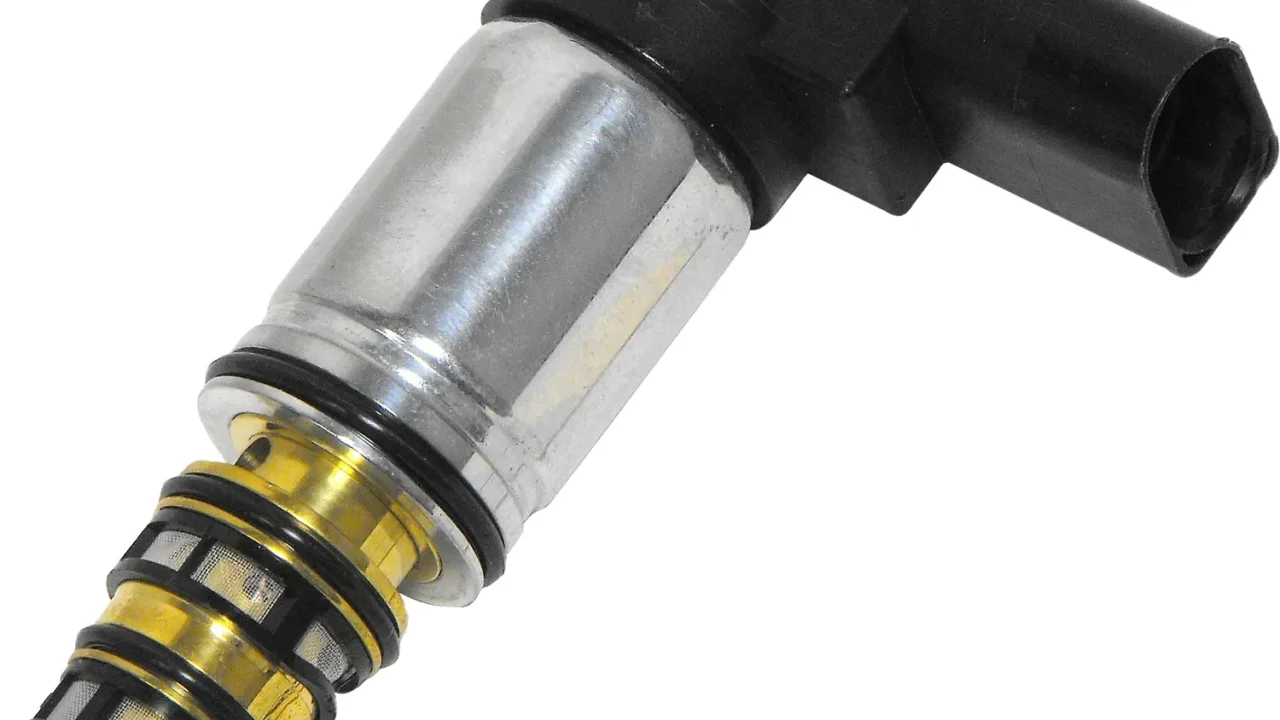
A compressor control valve and an expansion valve are not interchangeable. The compressor control valve regulates compressor displacement at or inside the A/C compressor, while the expansion valve meters refrigerant flow into the evaporator. In B2B A/C parts orders, the most common cause of a mix-up is an inquiry that says only “valve” or “expansion valve.” To avoid a wrong connection, delayed repair, and return freight, buyers should confirm part function, mounting location, port/thread style, connector type, and the relevant compressor or vehicle application before quoting.
1. Why “Valve” Is Not Enough: Compressor Control Valve vs Expansion Valve in Function and Location
1.1 Compressor Control Valve: Capacity Control at the Compressor
The compressor control valve sits on or inside the A/C compressor. It adjusts compressor displacement in response to suction pressure, discharge pressure, or an electronic control signal. A faulty unit may cause poor cooling at idle, short cycling, or a compressor that stays at minimum or maximum capacity.
Key fitting clues: the part is usually cylindrical, may thread into the compressor body, and may be secured by a snap ring. It often has a small O-ring seal and, in electronic versions, a two-pin connector.
1.2 Expansion Valve: Refrigerant Metering at the Evaporator Inlet
The expansion valve is installed in the liquid line or at the evaporator inlet, not on the compressor. It reduces high-pressure liquid refrigerant to a low-pressure mist and controls superheat at the evaporator outlet. A failed expansion valve commonly causes an evaporator that freezes, weak cooling, or intermittent cooling.
Key fitting clues: the expansion valve may be a block-type valve with multiple O-ring ports, a flare connection valve, or a cartridge. It does not control compressor displacement.
2. Fitment Details That Separate Compressor Control Valve and Expansion Valve Orders
2.1 Mounting, Port and Thread/Connector Style
Do not compare these parts by appearance alone. Two small valves can look similar but differ in thread pitch, port spacing, seal type, and mounting flange.
- Compressor control valve: confirm thread diameter, pitch, installed length, O-ring groove position, and whether it is clipped or bolted into the compressor.
- Expansion valve: confirm inlet/outlet fitting type, O-ring or block port count, bolt spacing, and bracket or line mounting position.
2.2 Control Type and Electrical Interface
Many compressor control valves are mechanical or pneumatic, but electronically controlled compressors use a valve with a specific electrical connector. Expansion valves are usually mechanical, but some systems combine them with sensors or use an electronic metering device. Confirm the connector shape, pin count, and wire path before ordering.
2.3 Vehicle/Compressor Application vs Evaporator/Line Application
Compressor control valves must match the specific compressor model and calibration. Expansion valves must match the vehicle A/C system, evaporator inlet design, refrigerant type, and line layout. An OE number that is valid for one vehicle may not be valid for a similar-looking valve on another platform.
3. Incomplete A/C Parts Inquiries: Symptoms That Can Point to Either Valve
3.1 Symptoms That Can Point to Either Part
Weak cooling, intermittent cooling, poor performance at idle, or evaporator freezing can be caused by either a compressor control valve or an expansion valve. Quoting from symptoms alone increases the chance that the buyer receives the wrong part.
Example poor request: “Need A/C valve for 2010 VW, air not cold.” This does not say whether the valve is on the compressor or in the evaporator line.
3.2 Minimum Information Before Quoting
- Exact part name: compressor control valve or expansion valve
- Photo of the old part showing mounting face, ports, and connector
- OE number or compressor model for control valve inquiries
- Vehicle model, engine, refrigerant type, and evaporator/line details for expansion valve inquiries
4. How to Request RFQ Evidence for Compressor Control Valve or Expansion Valve Without Delay
4.1 Photo and Label Checklist
Ask the workshop or customer to photograph the part in place before removal, the label or stamped number, and the mating connector or line. A clear photo usually resolves the first-level fitment question.
4.2 OE Number and Measurement Script
- Does the part mount on the compressor or in the refrigerant line?
- What is the OE number stamped on the old part or label?
- Can you show the connector face and pin count?
- For a control valve, what is the compressor make and model?
- For an expansion valve, what are the port sizes, thread type, and bolt spacing?
5. Final Verification Checklist for A/C Parts Orders
- Part name is specific, not just “valve.”
- Function and location match the failed part.
- Port, thread, connector, and mounting dimensions are compared.
- OE number or compressor/vehicle application is confirmed.
- Refrigerant type and system-side details match the requested part.
COOLMASTER lists compressor control valves and expansion valves as separate automotive A/C and HVAC components. Product fitment must be verified against specific vehicle, compressor, and part data; listing information is for identification and does not guarantee universal interchange without confirmation.
Action step: Before confirming price or availability for any A/C valve order, send the above checklist to the customer. If the inquiry only says “valve,” ask whether the part is mounted on the compressor or at the evaporator, then request an OE number and photos. This one-minute clarification prevents a costly two-part mix-up.
常见问题
What is the difference between a compressor control valve and an expansion valve?
A compressor control valve regulates compressor displacement at or inside the A/C compressor, while an expansion valve meters refrigerant flow into the evaporator from the liquid line. They have different locations, functions, and connection styles.
Can a compressor control valve be used in place of an expansion valve?
No. They are not interchangeable because they mount in different parts of the A/C system and perform different control functions. Interchanging them creates fitment and performance problems.
What information should I request when a customer only says “expansion valve” or “control valve”?
Request the exact part name, a photo of the old part, the OE number, and whether the valve mounts on the compressor or in the refrigerant line. For compressor control valves also ask for the compressor model; for expansion valves ask for the vehicle, evaporator, and port details.
Why does OE number matter more than symptom description for these valves?
Symptoms like weak cooling or intermittent cooling can point to either part. An OE number identifies the specific part and its application, reducing the risk of ordering the wrong valve.
Product image from COOLMASTER · 配图仅作产品类别示意,不代表具体车型适配建议