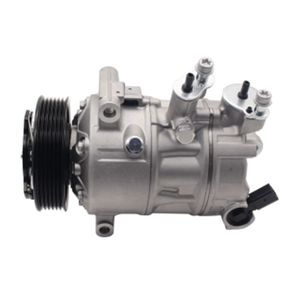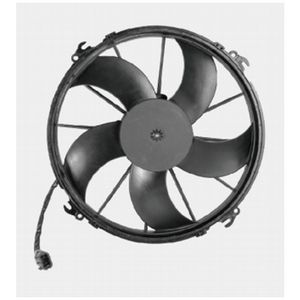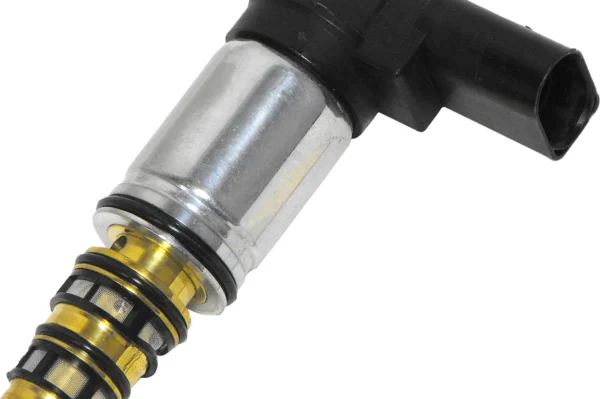

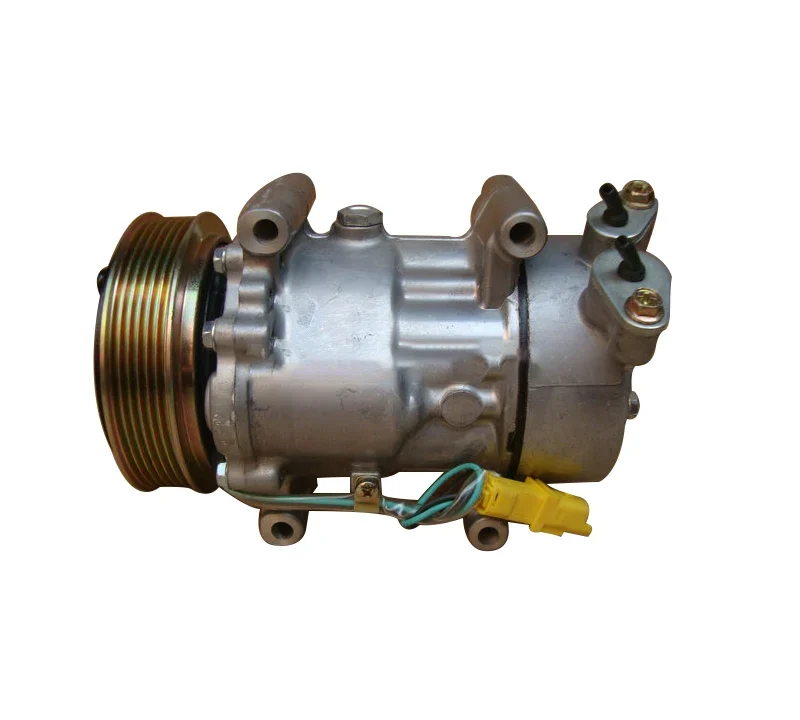
A hybrid or electric vehicle can request cabin cooling with its engine off, yet still deliver increasingly warm air from the vents. Conversely, an electric compressor may be audible while refrigerant circulation remains restricted by a control inhibit or another system fault. These observations expose an important diagnostic change: replacing belt drive with an electric motor changes not only where shaft power comes from, but also how pumping capacity is requested, limited, and verified.
From engine-linked rotation to an electronic capacity request
In an engine-belt-driven arrangement, compressor shaft speed follows engine speed through the drive ratio whenever the compressor is engaged. A clutch may connect or disconnect the drive, while a variable-displacement mechanism can change refrigerant pumping without changing shaft speed. Consequently, pulley rotation alone never proves full capacity, and a stationary pulley does not necessarily indicate an internal compressor failure. Not every automotive compressor uses this arrangement; some vehicles employ other mechanical drives, and hybrid or electric platforms commonly use electrically driven units.
An electric A/C compressor combines a motor with power electronics that regulate motor operation. The thermal-management controller can request a speed or capacity according to cabin demand, component temperatures, and system limits, independently of engine rotation. This permits cooling during engine-off operation and avoids tying compressor speed directly to idle or road speed. It does not make capacity unlimited. The command remains subject to the available electrical supply, permitted operating range, sensor plausibility, fault status, and protection logic. Depending on vehicle design, the same thermal system may also coordinate cabin cooling with battery or power-electronics cooling, so a cabin-cooling request is not always the controller’s only priority.
Independent operation still depends on the refrigeration circuit
Compressor motion and delivered cooling are different observations. Refrigerant mass flow depends on effective displacement and speed, but also on charge condition, metering-device behavior, internal leakage or restriction, and pressure conditions across the circuit. The expansion valve or other metering device controls refrigerant admission to the evaporator; it does not merely follow the compressor’s electrical command. Evaporator heat absorption then depends on airflow, air temperature and humidity, refrigerant distribution, and the evaporator’s condition.
Heat rejection remains equally important. A front-mounted condenser normally encounters outside air before other front-end heat exchangers, with fan airflow especially significant when vehicle speed provides little ram air. Idling does not automatically mean inadequate condenser airflow, because fan control and system design vary. Likewise, an electric compressor cannot compensate indefinitely for restricted airflow, severe fouling, or abnormal hot-air recirculation around the condenser. High pressure, low pressure, or a particular subcooling value cannot be interpreted without considering system architecture, control state, ambient conditions, and heat load.
This is why a running electric motor is not proof of correct refrigeration. The controller may be commanding a reduced speed, the compressor may not be achieving the reported request, or the refrigerant and air sides may be preventing useful heat transfer even when pumping is occurring.
The diagnostic evidence shifts from the pulley to the control state
Warm or insufficiently cold vent air should start a structured distinction between air-side and refrigerant-side causes. Blower airflow, temperature-door position, air distribution, and evaporator temperature can produce similar driver complaints. Where equipped, scan data can then establish whether cooling is requested, what compressor speed or capacity is commanded, what operating value is reported, and whether a diagnostic trouble code or inhibit condition is active. Available data items differ by vehicle, and a reported operating state should not automatically be treated as independent proof of mechanical pumping.
Pressures and temperatures add context only when measured under documented conditions and compared with the applicable manufacturer information. A single pressure reading cannot separate every possible cause of low mass flow, poor heat exchange, incorrect metering, or control limitation. On a belt-driven system, technicians may begin with engagement and drive observations before assessing displacement control. On an electric system, command, electrical availability, communication, and protection status become equally fundamental. Neither architecture supports replacing a compressor solely because vent temperature has risen.
Replacement compatibility extends beyond fit and refrigerant connections
An electric compressor is not a universal upgrade for a belt-driven unit. Correct replacement requires confirmation of the vehicle’s electrical architecture, control and communication interface, connector arrangement, mounting, refrigerant compatibility, and specified lubricant. Lubricant requirements can involve both compressor durability and electrical insulation considerations; substituting oil or introducing incompatible contamination can therefore create problems beyond ordinary lubrication.
High-voltage inspection, isolation, disconnection, and restoration procedures are design-specific and must come from the vehicle and component service documentation. The same applies to refrigerant recovery, evacuation, charging, and any required control setup. The practical diagnostic boundary is clear: first establish what the controller requested, what it allowed, and what the complete thermal system actually did. Only then should test results be used to narrow the fault to the compressor or another part of the system.
Product image from COOLMASTER · 配图仅作产品类别示意,不代表具体车型适配建议